When we finish a session at my studio in Greenville, SC, the work is only half-done. I spend hours, sometimes many sessions, building contrast, clean blacks, and smooth grey transitions so a realism piece heals with strength and clarity. The moment you leave, the responsibility shifts from my hands to yours.
Tattooing is not about decoration. It is a discipline of anatomy, composition, and permanence. When I place ink into the skin, I am building something meant to endure. Aftercare is not an extra step. It is part of the structure of the final result. If you want realism to stay sharp, readable, and balanced over time, hygiene and preservation must guide every decision from the first day forward.
The First Hours: Protecting the Structural Integrity
The first 24 hours are critical for the longevity of your black and grey tattoos in Greenville, SC. When I finish a piece, I usually apply a medical-grade breathable bandage. This is not simple plastic wrap. It is a protective barrier that shields compromised skin from bacteria, friction, and unnecessary contamination while the body begins its repair process.
Realism depends on subtle tonal relationships. If the skin becomes irritated, overworked by bad care, or exposed to unhygienic conditions early in healing, those soft greys can heal unevenly and the tattoo can lose depth. Hygiene is not only about avoiding infection. It is about preserving contrast, clean edges, and the full range of value that gives realism its power.
- Keep the bandage on: If I use a "second skin" type bandage, leave it for the 3 to 5 days I tell you. It keeps the natural fluids of your body: the plasma: exactly where they need to be to heal the wound from the inside out.
- Do not touch: I know, you want to show your friends. But your hands carry bacteria that are the enemy of your new art. Wait until you are in a clean environment.
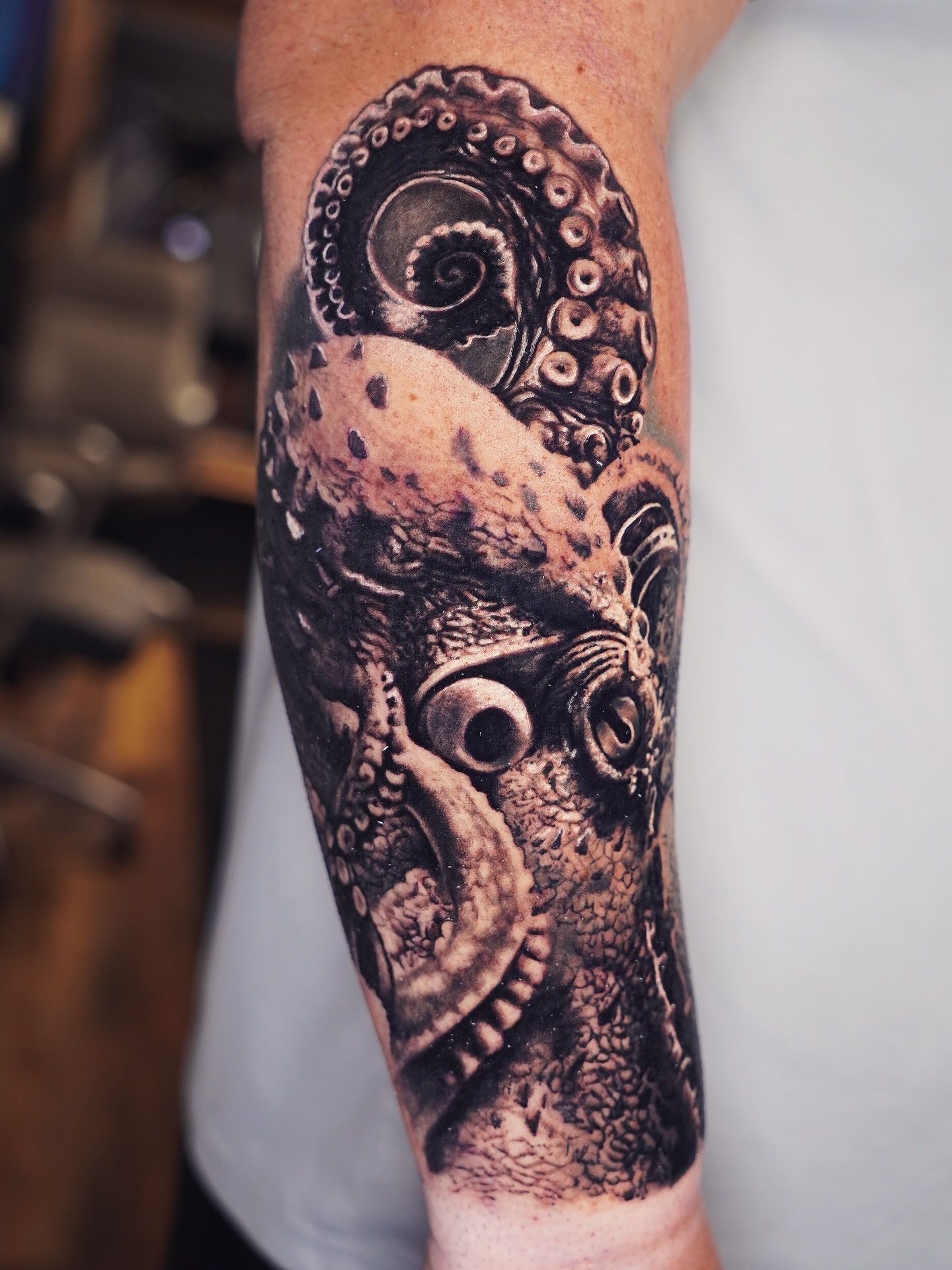
This octopus piece on the forearm shows how texture and depth depend on a perfect heal. Without proper care, these fine details in the tentacles can lose their sharpness.
The Ritual of Cleaning
When it is time to remove the bandage, do it with care. This is a controlled process. You are not simply washing skin. You are preserving a fresh piece while the surface is still vulnerable.
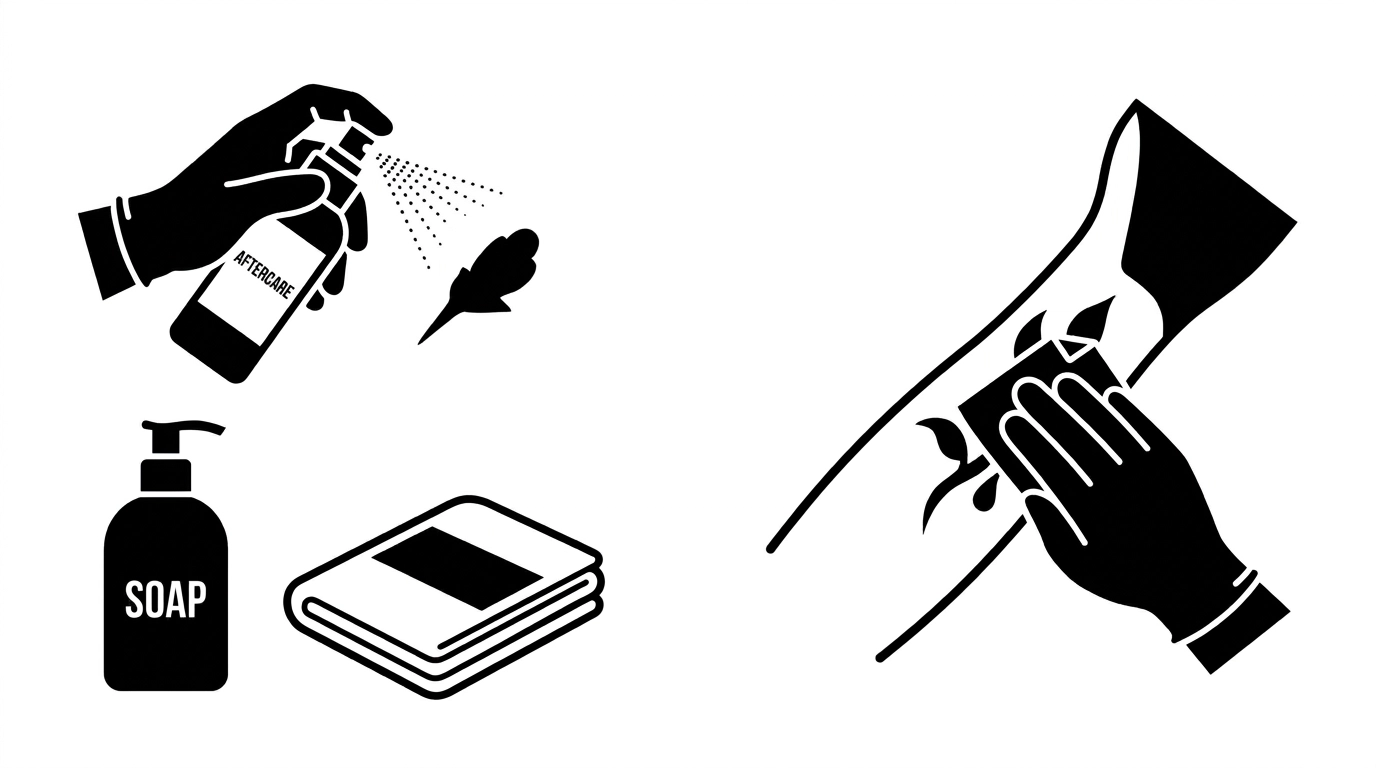
- Wash your hands first: This is non-negotiable. Clean hands reduce the risk of introducing bacteria into an open healing area. Use a mild, fragrance-free soap.
- Use lukewarm water: Water that is too hot can increase irritation. Water that is too cold does not clean the area as effectively.
- Clean with a gentle touch: Use clean fingertips to remove excess plasma, ointment, or residue. Do not use washcloths, loofahs, or anything abrasive. Friction can damage healing skin and disturb fine detail.
- Pat dry with a clean paper towel: Do not rub. Rubbing creates irritation where calm, controlled healing is required.
I tell my clients this clearly: the form is placed in the skin during the session, but the clarity is protected by disciplined hygiene in the days that follow.
Feeding the Skin: The Balance of Moisture
In my experience as a realism tattoo artist in Greenville, SC, I see one mistake again and again: people use too much ointment.
Your skin needs balance. If you cover the tattoo in a thick layer of product, you create excess moisture and trap heat, debris, and bacteria against healing skin. This can lead to irritation, clogged pores, bubbling, and compromised healing.
- Less is more: Use a very thin layer of fragrance-free, water-based lotion or a specific tattoo balm.
- The "Sheen" Rule: Your tattoo should look slightly hydrated, with a soft sheen. It should not look wet or greasy. If it looks like it's under a layer of oil, you have used too much. Wipe the extra off with a paper towel.
- Frequency: Do this 2 or 3 times a day. Your skin will tell you when it’s thirsty. If it feels tight or itchy, it needs a tiny bit of moisture.

The Evolution: Peeling and the "Silver Skin"
After about a week, the tattoo will change. This stage requires discipline. The skin may begin to flake or peel, similar to a mild sunburn. Underneath, the tattoo can look slightly cloudy. This is often called "silver skin."
This is a structural necessity of healing. The outer damaged layer sheds while new skin forms over the tattooed area. During this phase, hygiene still matters. Keep the area clean, avoid unnecessary contact, and do not let itching turn into scratching or picking.
The Golden Rule: DO NOT SCRATCH. DO NOT PICK.
If you pull a piece of peeling skin before it is ready to fall off, you might pull the ink out with it. You will create a "hole" in the shading. In a black and grey portrait or a high-contrast piece like my Saint Michael design, a single missing spot can ruin the balance of the whole image. If it itches, pat it gently or apply a tiny bit of lotion. Be patient.
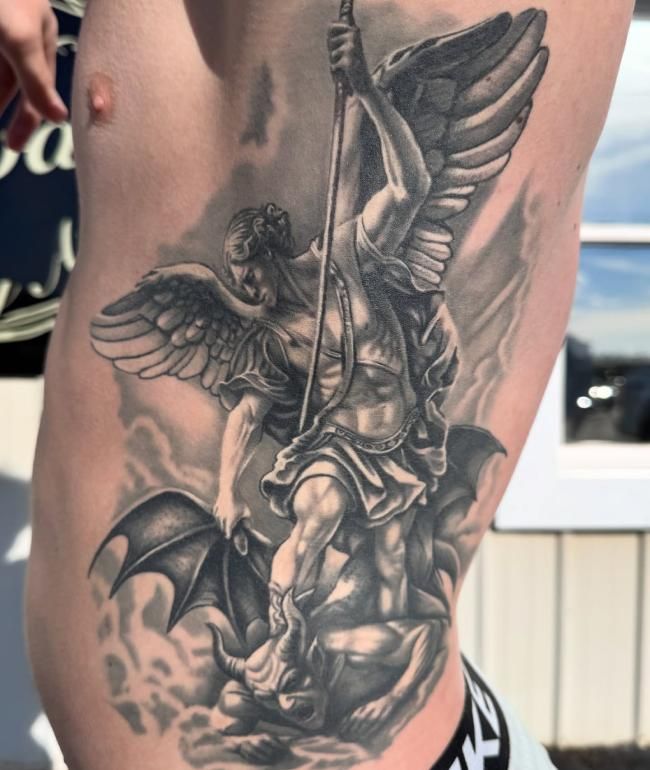
High-contrast pieces like this Saint Michael require the skin to heal perfectly flat to maintain the dramatic lighting and shadow.
Long-Term Survival: The Enemy of Contrast
Once your tattoo is healed, usually after 3 to 4 weeks, the work is not over. Realism depends on preservation. If you want the composition to remain legible and the contrast to remain strong, you must protect the skin long after the peeling ends.
UV exposure is one of the fastest ways to weaken a black and grey tattoo over time. Sun breaks down pigment and softens the transitions that realism depends on. A tattoo that is not protected will lose crispness. Dark values fade. Fine detail becomes less distinct.
- Use sunscreen consistently: When the tattoo is fully healed, apply SPF 50 whenever it will be exposed to the sun.
- Keep the skin healthy: Hydrated, well-cared-for skin presents tattoos more clearly. Dry, neglected skin makes healed work look dull.
- Avoid soaking during healing: Stay out of pools, hot tubs, and the ocean for at least three weeks. Chlorine, salt, and prolonged moisture are bad for healing tissue and bad for clean results.
- Respect clean environments: During healing, avoid gyms, dirty surfaces, and unnecessary exposure to sweat, friction, and bacteria whenever possible.
A Dialogue That Never Ends
For me, the process of creating a tattoo is a dialogue between the artist and the client. When you come to me for a one-on-one consultation, we talk about your story and your vision. I use my technical knowledge of composition and form to build that story on your skin.
But once you leave the studio, you are the one who keeps that story alive. If you follow these steps, your black and grey realism will stay fresh, bold, and powerful for decades. It is a commitment to the art.
If you have questions during your healing, or if you are ready to start a new project in my Greenville studio, reach out. I am here to make sure the art we build together stays perfect.