Tattooing is not about decoration. It is an act of translation.
When you decide to receive a custom piece of body art, you are entering into a dialogue where form, contrast, and intention must work together on a living surface. My commitment is to the structural integrity of the design and the discipline required to make black and grey realism hold its power over time.
Black and grey realism is one of the most demanding disciplines in tattooing. It depends on control. It depends on restraint. It depends on a serious understanding of anatomy, composition, value, and the way light must be interpreted through black ink alone. For someone getting a first custom piece, the style can seem intimidating. This guide is meant to clarify the technique behind it and explain why this approach remains one of the strongest forms of tattoo work.
The Anatomy of Realism: Form and Composition
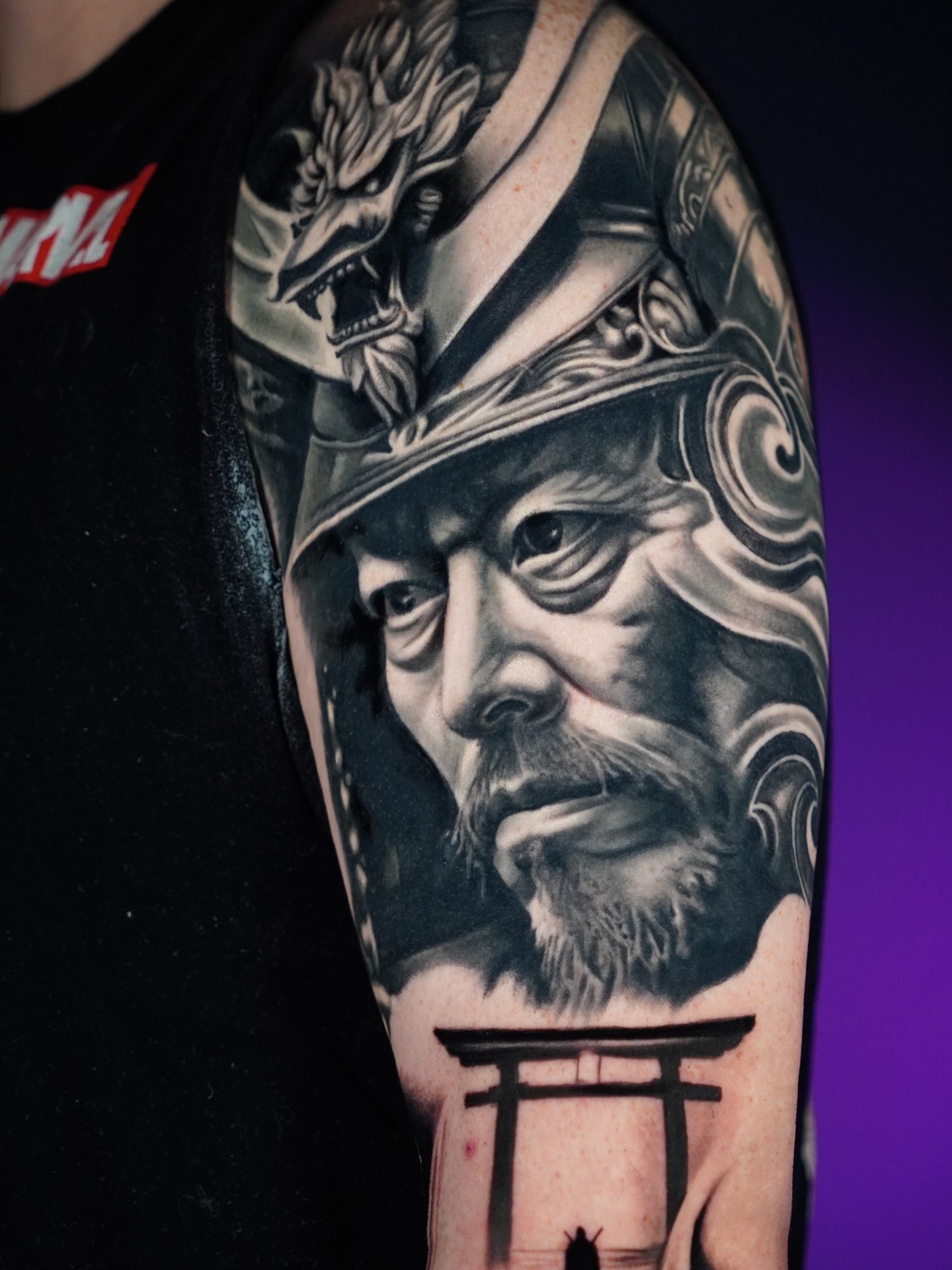
Realism in tattooing is the pursuit of capturing the essence of a subject with photographic fidelity. However, unlike a photograph printed on paper, a tattoo must exist on a living, three-dimensional canvas. This is where the study of anatomy becomes essential. A design must flow with the natural musculature of the body; if it fights the form, the realism is lost.
In my studio, we prioritize composition above all else. Before the needle ever touches the skin, we analyze how the primary subject sits against the "negative space" of your natural skin tone. We are not just creating an image; we are building a structure. Whether it is a portrait, a floral arrangement, or a complex scene, the goal is to create a sense of depth that makes the artwork appear to have weight and dimension.
The Structural Necessity of Contrast
A common misconception among those looking for black and grey tattoos in Greenville, SC, is that realism should be soft. While smooth transitions are a hallmark of the style, contrast is the engine that drives longevity. Without deep, saturated blacks, a tattoo will lose its definition over time.
I often speak to my clients about the "darkest anchors" of a piece. These are the areas where the black ink is most concentrated, providing the necessary contrast to make the highlights pop. These highlights are frequently achieved not with white ink: which can fade and yellow over years: but through the strategic use of your own skin tone. This is the art of "negative space." By leaving certain areas untouched, we create a brightness that no pigment can truly replicate.
Technique Before Speed
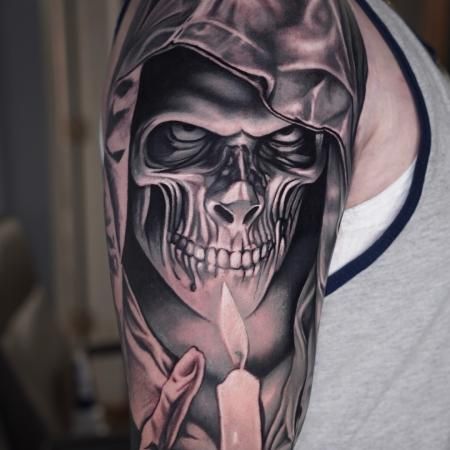
A strong realism tattoo is built in layers of decision-making. The stencil must read clearly. The placement must respect the body’s movement. The dark values must be established with confidence, and the transitions between tones must remain smooth without becoming weak. This is where technique separates average work from lasting work.
Needle choice, hand speed, depth, and saturation all matter. A soft gradient is not accidental. A clean edge is not accidental. The illusion of volume in black and grey realism comes from controlling how one value moves into the next. If the tones are muddy, the form collapses. If the contrast is poorly structured, the tattoo can flatten out as it heals and ages.
Permanence, Pain, and Responsibility
There is an inherent weight to this craft that must be respected. Tattoos are permanent, and the process of acquiring them involves a degree of physical endurance. I do not sugarcoat these truths. Pain is a part of the transformation, and aging is an inevitability.
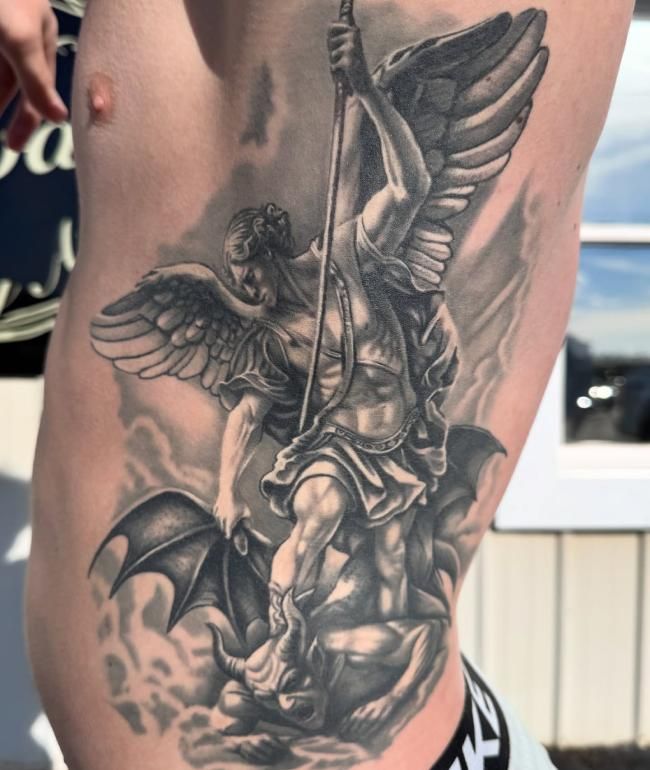
However, a well-executed realism piece is designed to age gracefully. By focusing on longevity through technical skill: such as precise needle depth and proper ink saturation: we ensure that the clarity of the work persists. When you look at my portfolio, you are seeing a commitment to consistency. Every line and every shade is placed with the intention of lasting a lifetime. This is the weight of my responsibility to you.
Why Black and Grey Realism Endures
Trends in tattooing come and go, but black and grey realism remains because the technique is rooted in fundamentals. It relies on composition. It relies on value control. It relies on the disciplined use of contrast to create form without depending on color. When the work is done correctly, the result feels timeless because it is built on structure rather than trend.
What gives this style its authority is precision. The eye goes directly to the smoothness of a transition, the weight of a shadow, the clarity of a focal point, and the balance of the full composition. That is why black and grey realism continues to endure. It asks more from the artist, and because of that, it can give more back to the client over the life of the tattoo.
Final Considerations for Your First Piece:
- Patience is a Virtue: Realism takes time. High-quality work cannot be rushed.
- Trust the Process: Your artist understands the technical requirements of the medium.
- Aftercare is Part of the Art: The work doesn't end when you leave the studio; the healing process is critical to the final result.
If you are ready to begin your journey, you can contact me here to schedule your initial consultation. Let us build something that stands the test of time.