A portrait tattoo is not a mere decoration. It is a profound act of translation, a technical and artistic commitment to the preservation of a legacy or a memory on the living canvas. In my studio in Greenville, SC, I approach each portrait not as a reproduction of a photograph, but as a structural reconstruction of a human face. To achieve hyper-realism and longevity, one must look beyond the surface level of a picture and understand the underlying anatomy, the movement of light, and the permanence of the medium.
The journey from a preliminary sketch to the final skin application is a methodical process rooted in academic art theory. It requires patience, precision, and an unwavering focus on technical excellence. Here is the philosophical and practical framework of how we bring your custom portrait to life.
The Dialogue: Translating Intent into Form
Every portrait begins with a consultation, a collaborative dialogue where we establish the conceptual foundation of the piece. This is where we discuss the narrative and the structural necessities of the design. A portrait requires a high-resolution reference, but more importantly, it requires a reference that captures the character of the subject through contrast and composition.
I evaluate reference material based on its anatomical clarity. We look for the way light defines the brow, the jawline, and the depth of the eyes. My role as an artist is to interpret these features and translate them into a design that respects the natural contours of your body. In my portfolio, you will see that placement is never accidental; it is a calculated decision based on the muscle structure of the area being tattooed. A portrait placed on a moving muscle must be designed to retain its integrity regardless of the body’s motion.
The Architectural Blueprint: The Sketch and the Stencil
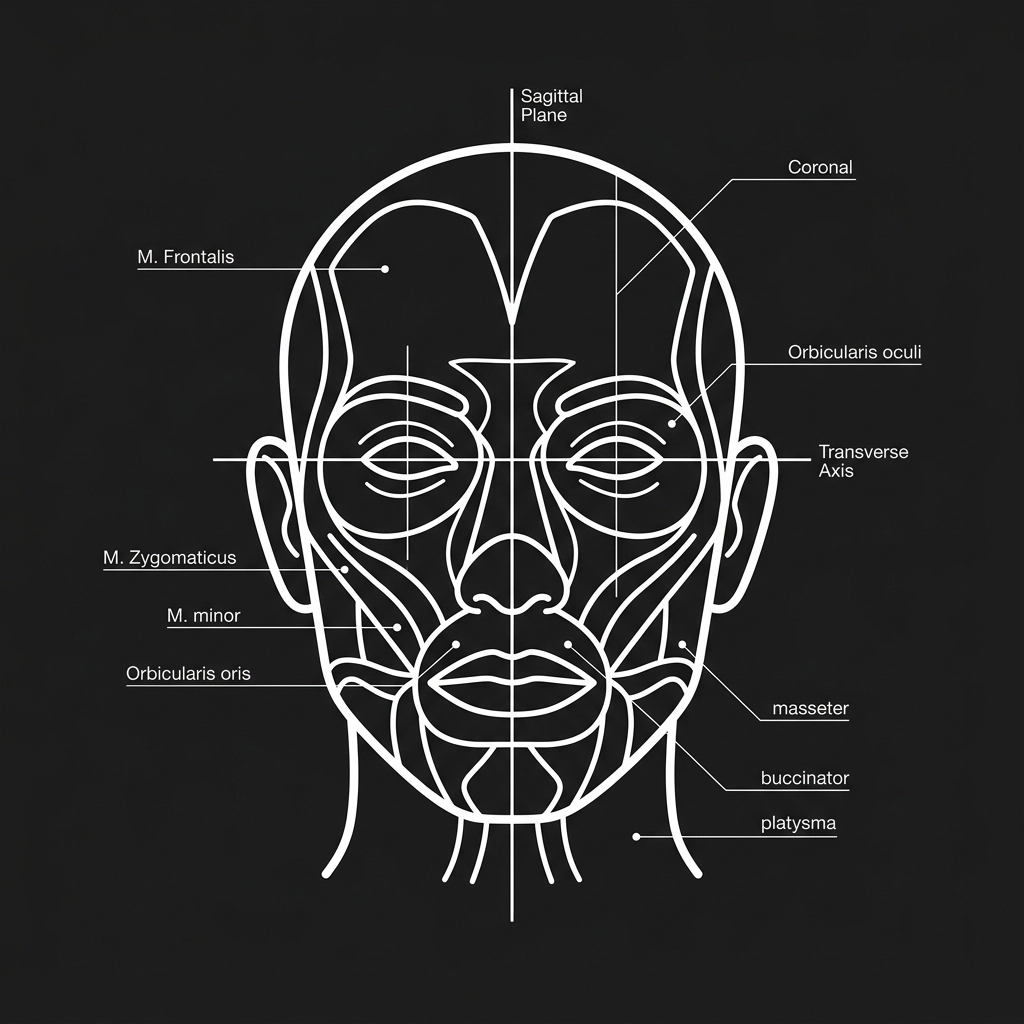
Before the needle ever touches the skin, the "building" process begins. I do not simply trace a photo. I build a blueprint. This involves a rigorous analysis of facial proportions and the planes of the face. By mapping out the highlights, mid-tones, and deepest shadows, I create a guide that ensures the final piece has the necessary depth to appear three-dimensional.
The stencil is the structural foundation. If the foundation is flawed, the entire composition will eventually fail. I spend a significant amount of time refining the stencil to ensure every anatomical landmark is perfectly placed. This is a moment of extreme focus: there is no room for error when dealing with the human face. We are not just creating an image; we are committing to a permanent record. This phase is about the responsibility of the craft.
Building the Foundation: Structural Mapping
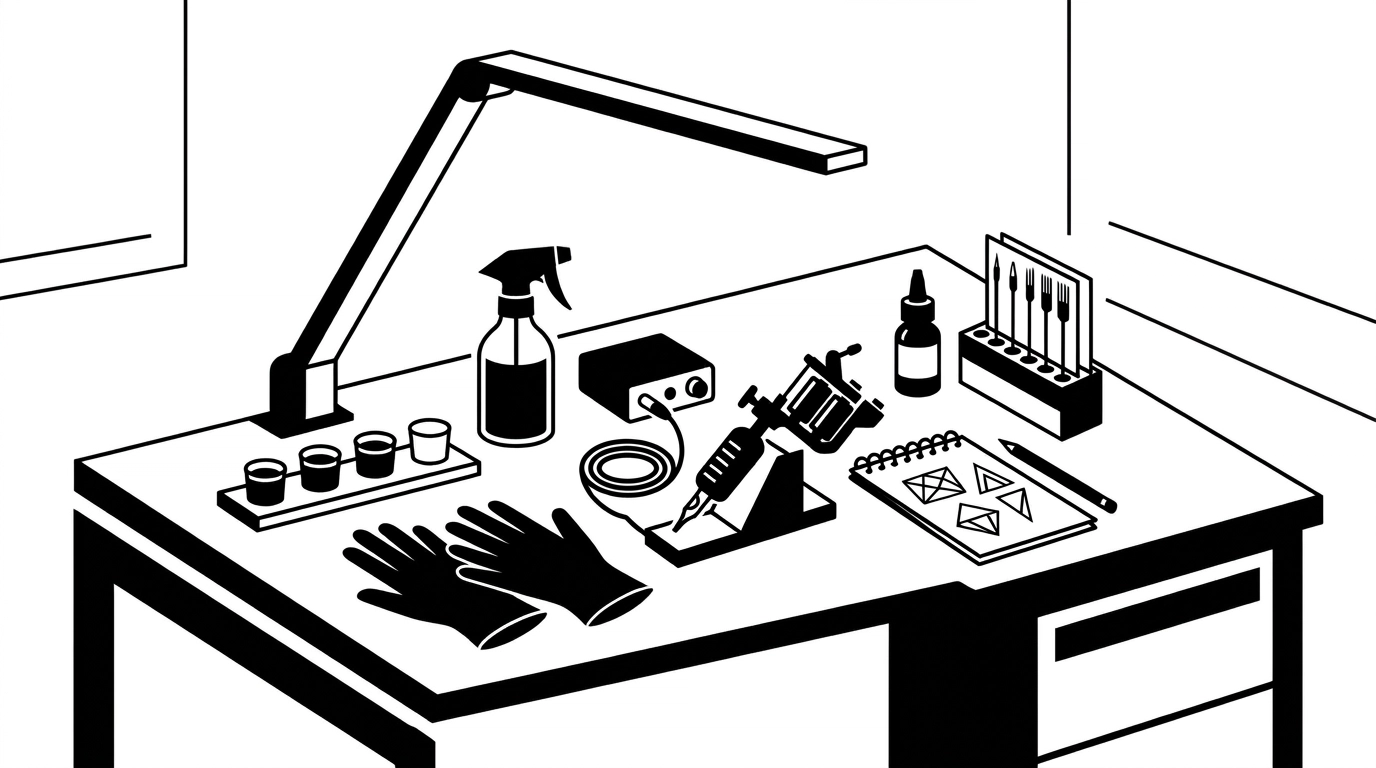
Once the stencil is applied and the skin is prepared with the highest standards of hygiene, the technical execution begins. I start with what I call "mapping." Using a light gray wash and precision needles, I establish the softest values of the portrait first. This allows me to verify the proportions on the skin before committing to the darker, more permanent pigments.
This stage is about patience. It is easy to rush into the details, but a true master of black and grey realism knows that the strength of a portrait lies in its structure, not its superficial details. We are building the face from the bone structure outward. By establishing the eye sockets, the bridge of the nose, and the temporal lines, I create a roadmap that guides the rest of the session.
Developing Depth and Contrast
Realism is achieved through the careful manipulation of contrast. In my studio, we utilize various dilutions of black ink: a gray wash system: to create a seamless spectrum of tones. This is where the portrait begins to breathe.
Technical skill is required to manage the needle depth and the saturation of the pigment. Too much trauma to the skin results in poor healing; too little saturation results in a tattoo that will fade into obscurity. Longevity is a core value of my work. Every shadow I pack and every highlight I leave as negative space is a calculated decision made with the next twenty years in mind.
- Anatomy: Respecting the skeletal and muscular structure under the skin.
- Composition: Ensuring the portrait is balanced within its frame.
- Contrast: Using the full range from deep black to the natural skin tone.
- Form: Creating the illusion of three-dimensional space on a two-dimensional surface.
The Nuance of Texture: Skin, Hair, and Soul
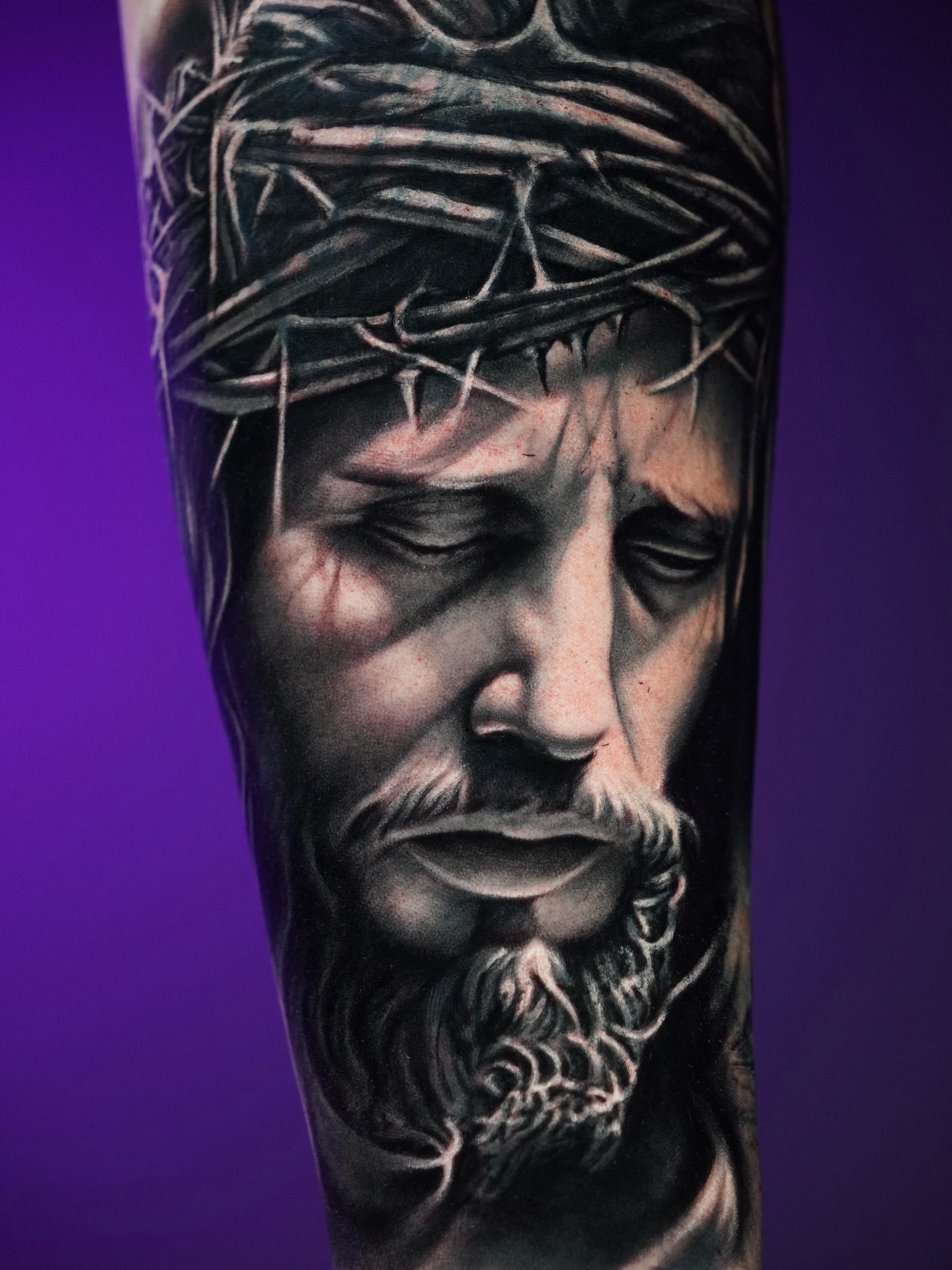
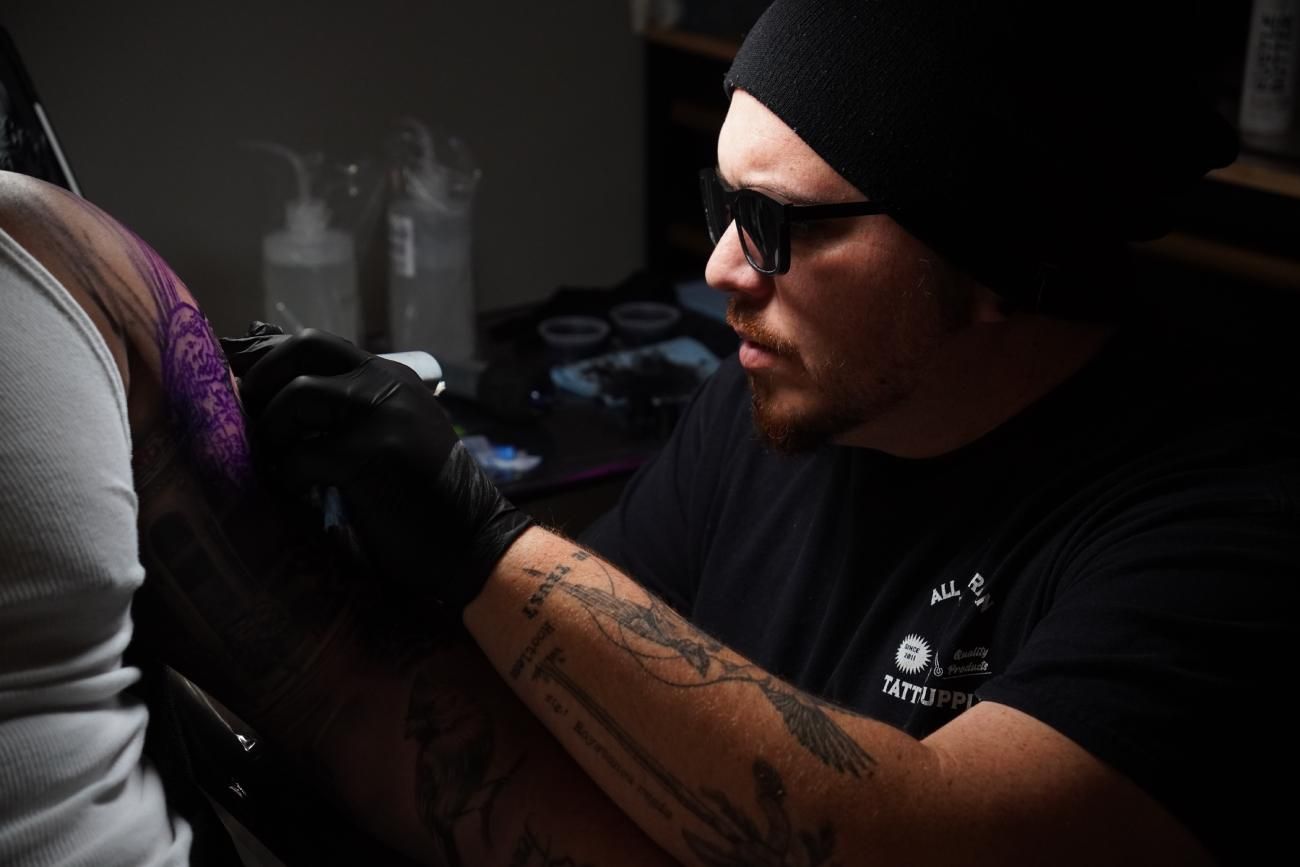
Once the structural mapping is complete, I move into the refinement of texture. This is the most demanding part of the process. I use specialized needle groupings to replicate the subtle textures of the human skin, the direction of hair growth, and the wetness of an eye.
These details are what differentiate a generic tattoo from a custom work of art. For example, hair is not a solid block of color; it is a collection of light and shadow that follows the curve of the skull. Each stroke must follow the natural flow of anatomy to look authentic. This level of detail requires an atmosphere of calm and total concentration. Speed is the enemy of quality. In my Greenville studio, we prioritize the integrity of the piece over the clock.
The Final Translation: Permanence and Responsibility
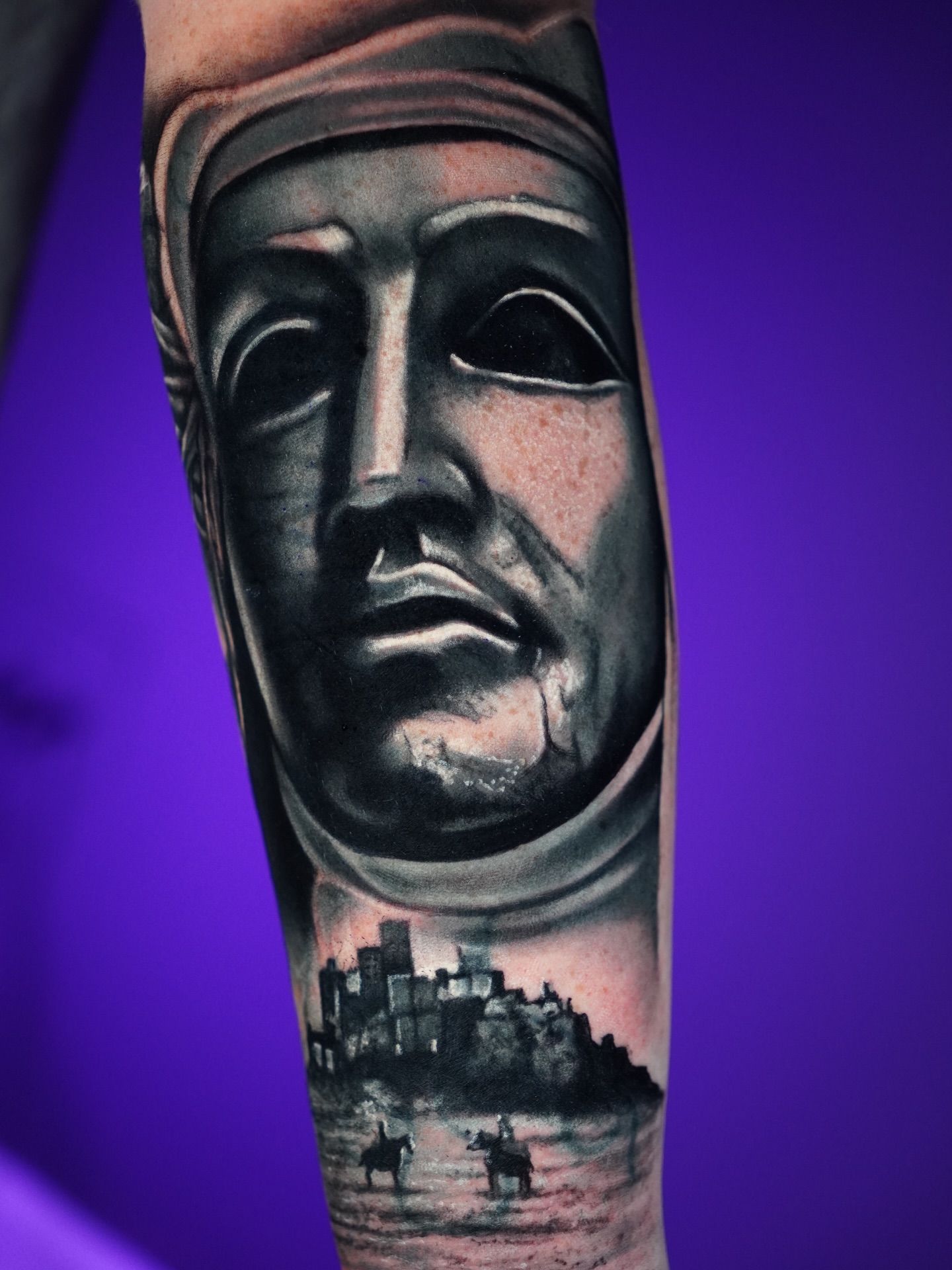
As the session nears its conclusion, I perform a final audit of the contrast. I ensure that the deepest blacks are saturated and the transitions between tones are smooth. A portrait is only finished when it possesses a sense of weight and presence.
Tattooing is not about temporary satisfaction; it is about the inevitability of aging and the permanence of the mark. My goal is to provide a piece that ages gracefully with you. The technical choices I make: the needle sizes, the ink saturation, and the complexity of the shading: are all directed toward long-term endurance.
When you leave the studio, you are not just carrying a drawing; you are carrying a piece of built art that has been translated through a dialogue of trust and technical mastery.
A Commitment to the Craft
The transition from sketch to skin is a rigorous journey that demands respect for both the subject and the medium. If you are seeking a portrait that reflects the depth of your story and the precision of academic art, I invite you to reach out.
Whether it is your first tattoo or a significant addition to your collection, the process remains the same: a focus on quality, a dedication to anatomy, and a commitment to creating something that lasts a lifetime. You can begin this collaborative process by visiting the booking page to schedule your one-on-one consultation. Let us build something meaningful together.