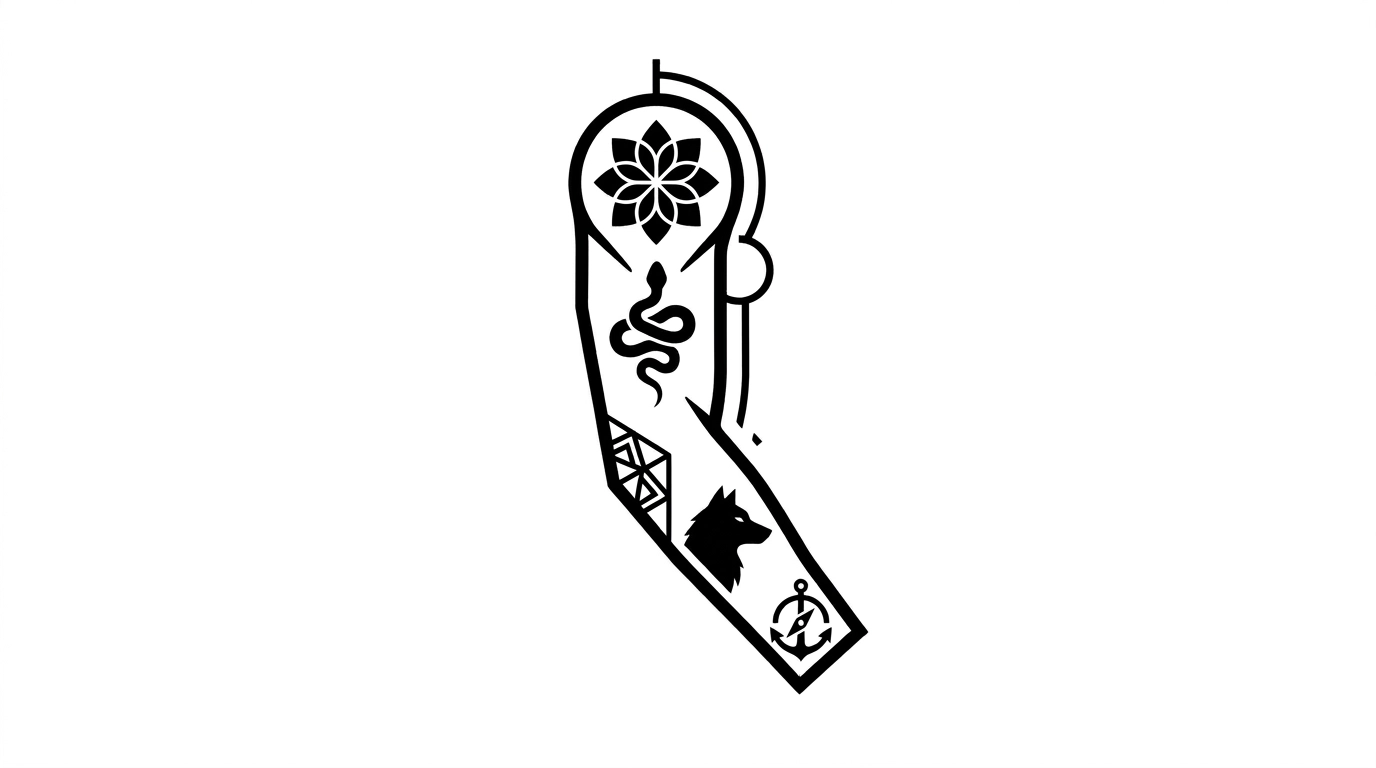
A tattoo sleeve is not a random collection of images. It is a long-term composition built through trust, intention, and clear communication between client and artist. When I plan a full sleeve, I am not thinking only about individual tattoos. I am thinking about structure, anatomy, flow, and how your ideas can be translated into one cohesive piece that will live on the body for years.
In black and grey realism, that collaboration matters from the first conversation. A strong sleeve does not happen because someone picks a few references and hopes they fit together. It happens because the client brings meaning, direction, and honesty, and the artist brings composition, technical judgment, and a clear understanding of longevity. For those seeking a sleeve tattoo artist in Greenville, SC, these five steps show how to plan a custom sleeve through a real collaborative process.
1. Establishing the Conceptual Foundation
Before the first needle touches the skin, the concept must be clear. A successful custom sleeve begins with a central idea that gives the composition structure and purpose. In black and grey realism, that foundation matters because every choice in contrast, form, and placement has to support the larger story.
Whether the theme is personal, symbolic, spiritual, or rooted in a specific visual language, it needs enough substance to carry a multi-session project. This is where collaboration starts in a serious way. The client brings the meaning, the memories, the references, and the intention. I take that material and begin organizing it into something that can function as a sleeve, not just as separate images placed next to each other.
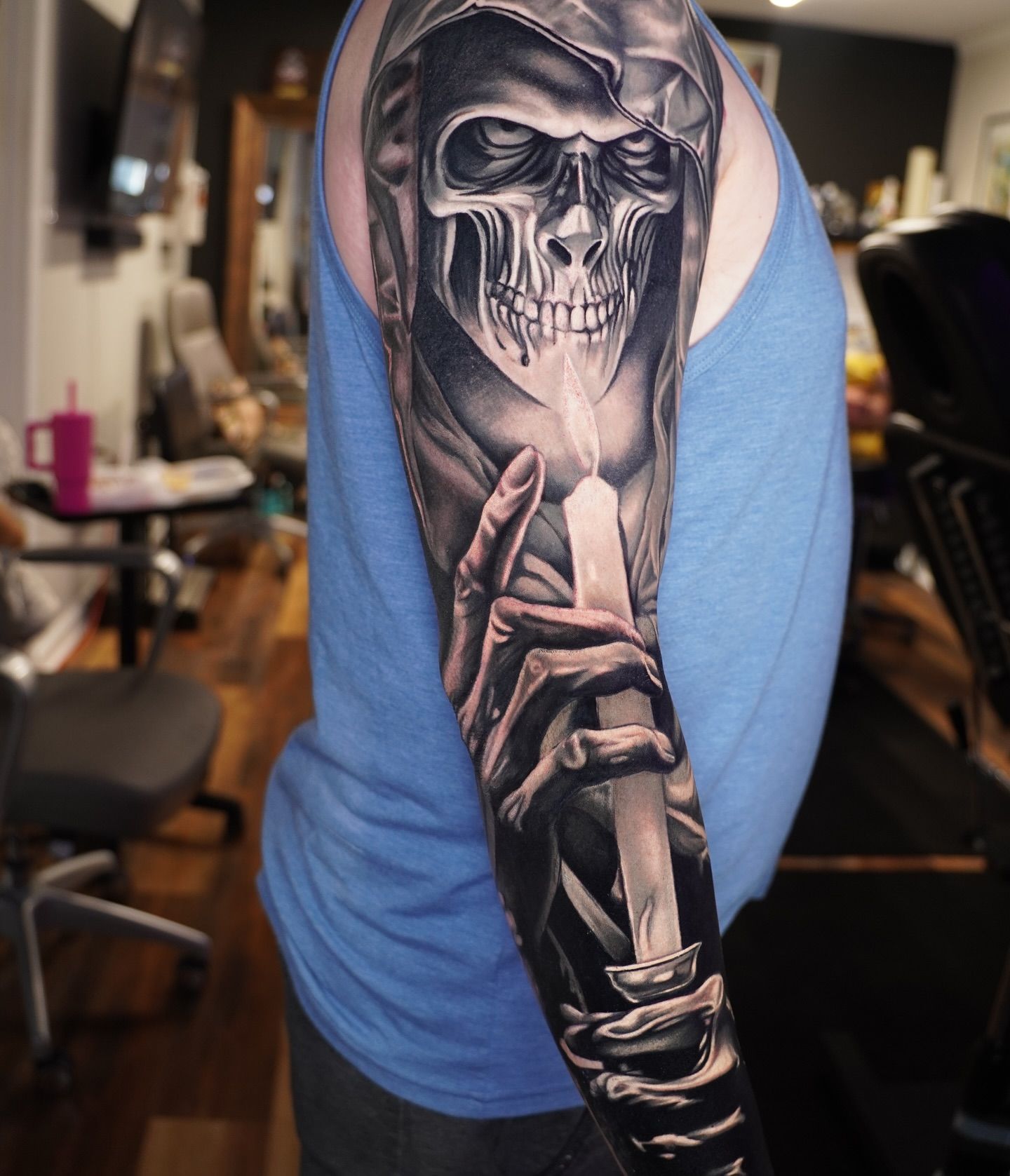
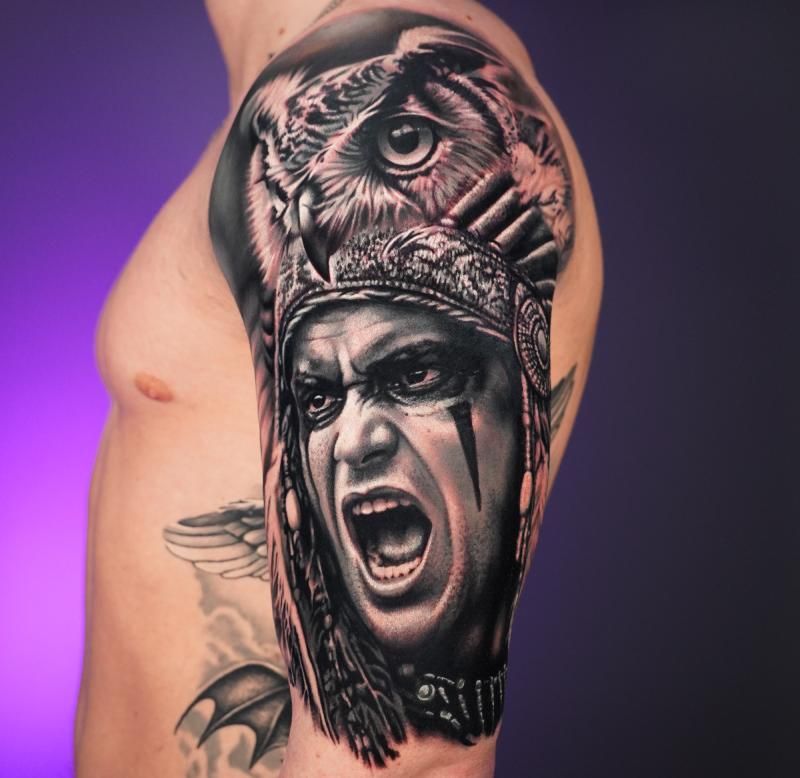
As seen in this custom tattoo design in Greenville, SC, the use of a primary focal point allows the surrounding elements to breathe. Without that hierarchy, a sleeve becomes visual noise. When client and artist agree on the main story first, every supporting element has a job. That is how the design stays legible from a distance and rewarding up close.
2. Anatomical Assessment and Structural Flow
The human body is not a flat surface. It is a moving structure made of joints, muscle groups, and changing angles. A tattoo that looks good in a flat reference image can fail on the body if anatomy is ignored. That is why the second step is assessing how the sleeve must flow with the arm, not against it.
I treat the arm as a landscape with structural demands. The shoulder cap, bicep, elbow, and forearm each require a different approach to composition. This is also part of the collaboration. I may need to explain why one image belongs on the outer forearm and not near the elbow, or why a portrait needs more space than the client first imagined. Good communication here prevents bad decisions later. The best sleeves are built when the client understands that placement is not arbitrary; it is guided by anatomy and long-term readability.
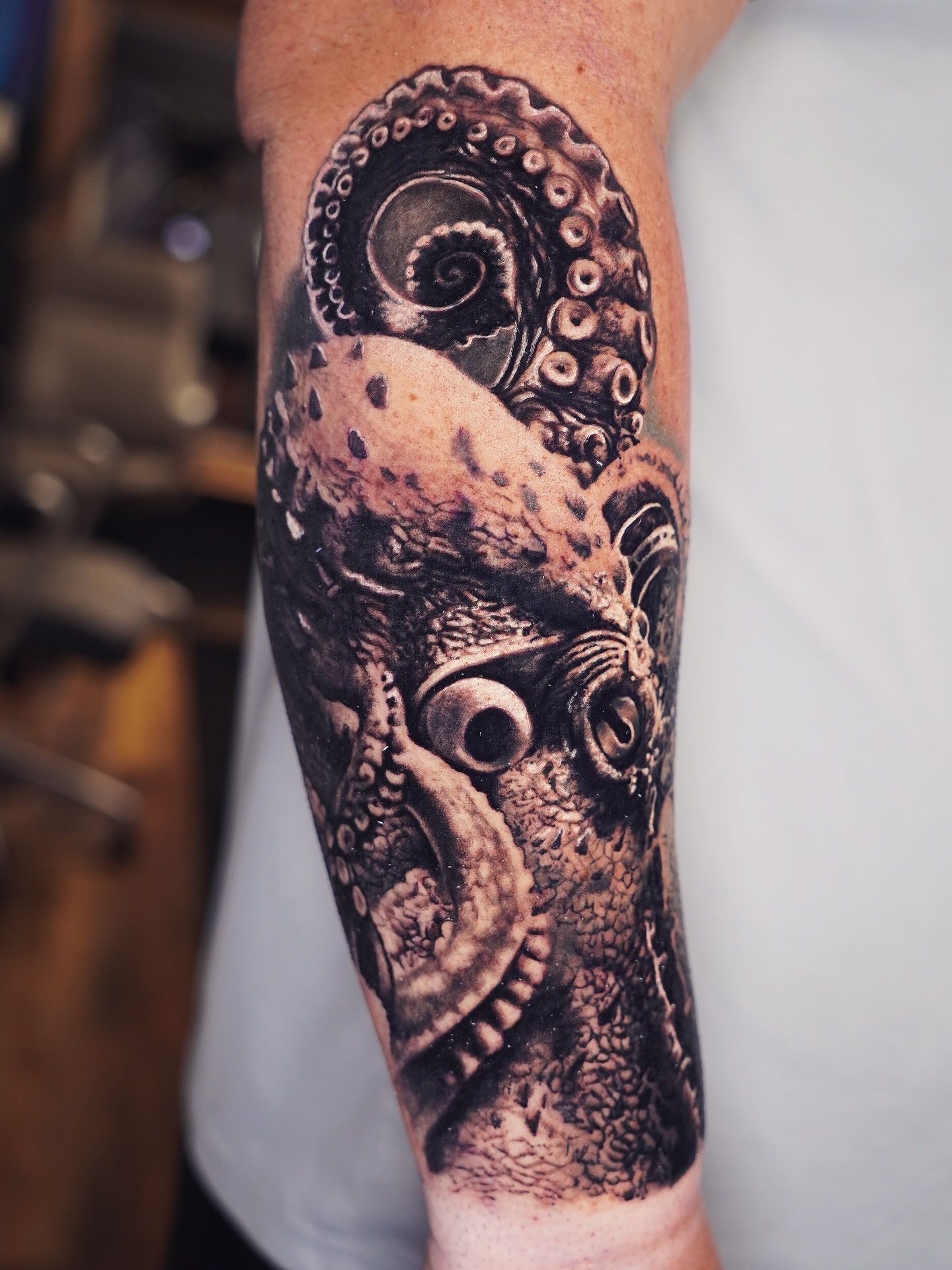
In the execution of realism, texture plays a vital role in how the tattoo integrates with the skin. Using the natural contours of the arm to enhance the three-dimensional quality of a subject, such as the tactile nature of an octopus or the soft draping of fabric, ensures that the art feels as though it has grown from the body rather than been placed upon it.
3. The Consultation as a Collaborative Dialogue
Communication is the bridge between the client's vision and the structural necessities of the craft. During a consultation at my Greenville studio, the goal is not simply to approve an idea. The goal is to build understanding. I need to know what matters to you, what images you connect with, what must be included, and where you are open to guidance. In return, I give you direct feedback about what will work, what will not, and why.

You must be ready to explain the reason behind the sleeve, not just the look. My responsibility is to interpret that reason through composition, contrast, and form so the final piece is both personal and technically sound. We discuss focal points, transitions, scale, and the visual rhythm that connects one section of the arm to another. This phase demands honesty from both sides. A client should speak clearly about expectations. An artist should speak clearly about limitations, pain, timing, and longevity. That kind of dialogue is what turns a good idea into a strong sleeve.
4. Technical Composition: Contrast and Negative Space
In black and grey realism, our tools are value, skin tone, and restraint. The fourth step is studying the tonal range of the entire sleeve so the composition has depth and remains readable over time. To achieve that, I balance deep blacks with controlled shading and the deliberate use of negative space.
Negative space is not emptiness. It is structure. It gives the eye a place to rest and gives the major elements room to exist. Clients sometimes want to fill every inch immediately, but that instinct can damage the composition. Part of my job in the collaborative process is explaining why certain areas need openness, why contrast must be protected, and why more detail is not always better. Without those decisions, a sleeve can lose clarity as the years pass.
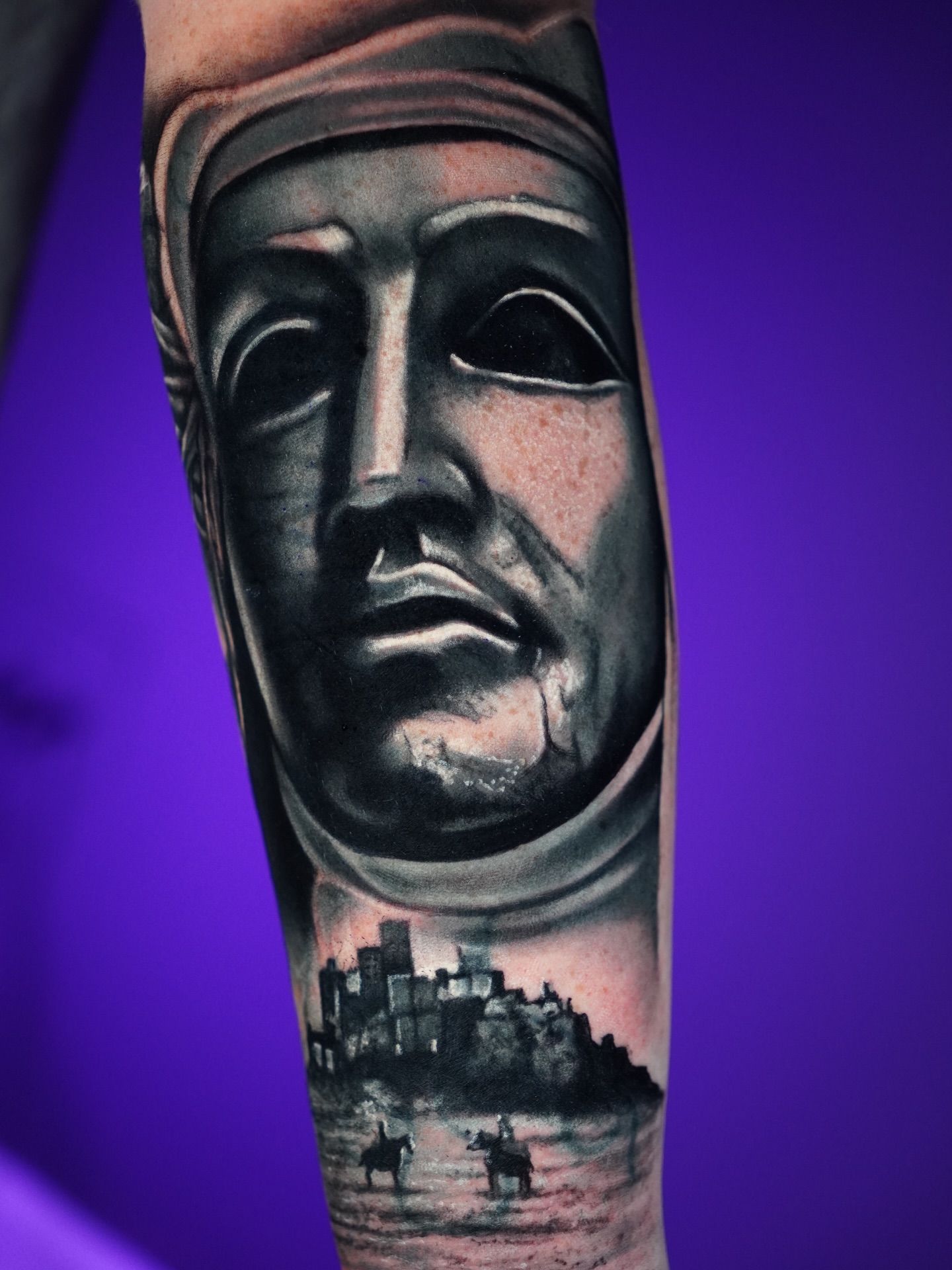
When we plan a sleeve, we are building layers of depth. We consider the foreground, mid-ground, and background to create a sense of infinite space on a two-dimensional surface. This structural depth is what separates a standard tattoo from a work of high art. It requires patience and a commitment to multiple sessions, allowing each layer to heal and settle before the next level of detail is applied.
5. The Commitment to Longevity and Permanence
The final step in planning a sleeve is accepting permanence. This is not only about sessions, pain, or budget. It is about living with the work for decades. Every decision I make, from the scale of a focal point to the density of the shading, has to consider how the tattoo will settle and age on the skin.
Longevity is a core value in my practice. Large-scale realism demands technical decisions that favor stability over short-term impact. That means some ideas need to be simplified, some details need more space, and some transitions need to be built with patience. The client and artist both have a responsibility here. I have to guide the design with honesty. The client has to commit to the process with realistic expectations and consistency.
The journey of completing a full sleeve demands endurance from both artist and client. It requires patience, consistency, and a shared commitment to the final result rather than quick satisfaction. When you book a session, you are not just buying time in a chair. You are entering a collaborative process built on trust, discipline, and the responsibility to do the work the right way.
The Finality of the Build
Planning a custom sleeve is an act of structure and intention. It requires artistic theory, anatomical awareness, and real collaboration between client and artist. By focusing on conceptual depth, anatomical flow, honest dialogue, technical contrast, and long-term vision, we build a sleeve that is personal, cohesive, and made to endure.
If you are ready to begin this collaborative process and seek a custom tattoo design in Greenville, SC, I invite you to bring your vision to the studio. Together, we will build a piece that respects your story, your anatomy, and the permanence of the work.
Yeins Gomez is a professional tattoo artist specializing in high-detail black and grey realism. Based in Greenville, SC, he focuses on custom designs built through collaboration, strong composition, and respect for the individuality and anatomy of every client.